

Before buying acreage near Wichita, identify the house’s actual water source, wastewater path, and governing jurisdiction. Then build separate answers from seller and public records, specialist findings, and laboratory water testing. Those tools answer different questions, and none replaces the others.
A listing’s “well and septic” line is only a starting point. This guide covers an existing acreage home during the offer and inspection period, not whether vacant land can support a future home.
Start With Two Facts: What Serves the House, and Who Regulates It?
Start by confirming whether the house uses public or private water, where its wastewater goes, and which office has authority over the address. Do not rely on the listing description alone.
The water source might be a public utility or a private well. The wastewater path might be public sewer, a septic tank and lateral field, a lagoon, or an advanced onsite system. A property can also have more than one well or an old system that needs to be identified.
The rules discussed here are jurisdiction-specific examples from the City of Wichita and MABCD or Sedgwick County. They are not metro-wide rules. MABCD handles onsite wastewater and water-well matters in unincorporated Sedgwick County and extends those services to Clearwater, Garden Plain, Kechi, Maize, and Park City, but the exact scope still needs to be confirmed for the address.
For acreage in Butler, Harvey, Sumner, Reno, or another nearby county or municipality, do not apply Wichita or MABCD distance thresholds. Use the exact address to identify the county environmental-health or planning office and the municipal or regional sewer authority.
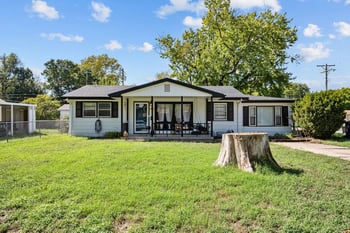
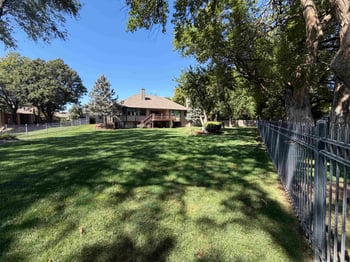
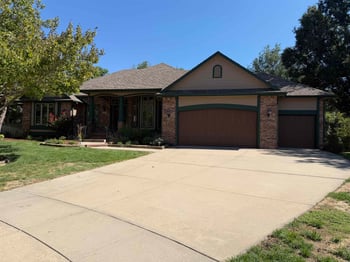
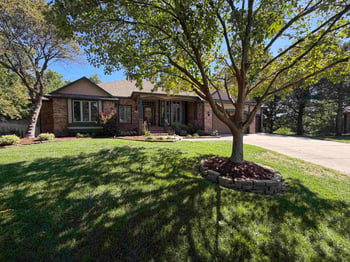
Consider two similarly priced acreage homes. One has public water and sewer. The other has a private well and onsite wastewater system with incomplete history. The parcel sizes may look comparable, but the unanswered utility questions are not.
You can browse homes with acreage in Wichita with this distinction in mind. If you are evaluating vacant land or planning major new structures, use the separate guide to whether land near Wichita is buildable.
Which Well and Septic Records Should You Request From the Seller?
Ask for one compact package from the seller: the system types and known locations; permits or design drawings; well logs; previous water results; pumping or service history; repairs; and known problems.
Next, compare that package with available public files. The MABCD permit lookup accepts address and parcel searches for permit or wastewater-use applications. The Kansas Water Wells map can help you look for an available well record. If a search does not produce a clear match, ask the responsible office whether it has an older file or another way to search.
Keep four evidence types distinct. Seller records describe the history the owner can supply. Local permit or well records show available public history and authorized work. A specialist’s findings describe what was observed or tested within the agreed scope. Laboratory results report the measurements for the contaminants included in the submitted sample.
A permit record can identify authorized work, but it cannot show whether a buried system is functioning correctly today. That distinction matters when a permit, pumping receipt, or well log is treated as the finish line rather than part of the property file.
A Well Inspection and a Water Test Answer Different Questions
A well inspection addresses the well’s construction, location, equipment, and operation within the specialist’s scope. A laboratory test reports only on the contaminants tested in the sample collected at that time.
When arranging a well and septic inspection, ask who will inspect each system and what the written scope includes. Confirm whether the well work covers the visible wellhead, location, pump operation, pressure equipment, accessible electrical components, and any performance measurements you want. A general home inspection does not automatically include all of that work.
For a property inside Wichita that contains a well, the City of Wichita water-well page says every well on that property must be inspected before ownership changes. Water from a personal-use well must also be tested. The City separately says an onsite wastewater system may be evaluated as part of that title-transfer inspection at the involved parties’ request.
Do not extend the City requirement to unincorporated Sedgwick County or every nearby city. MABCD’s well code covers unincorporated areas and only smaller cities that adopted it. Within that jurisdiction, permits apply to constructing, reconstructing, plugging, or treating covered wells, and bacteria and nitrate testing applies to newly constructed, reconstructed, or treated wells.
KDHE’s private-well testing guidance warns that one sample does not establish overall purity. Well construction, location, and nearby contamination concerns should be considered before bacterial testing, and routine testing can be performed through a Kansas-certified private laboratory.
A clean bacteria-and-nitrate result therefore answers only the tested-water question. It does not establish well yield, pump condition, proper construction, or future water quality. Ask the laboratory or appropriate specialist which additional tests fit the property’s location and known concerns.
What Should a Septic System Inspection Tell You Before You Buy?
A septic system inspection should explain what components and operating signs were examined, what could not be accessed or tested, and which findings need further diagnosis or a cost estimate.
EPA’s pre-purchase guidance calls for examining available permits, design or installation documents, system age, pumping and maintenance history, tank and component condition, and signs of drainfield failure. The inspection scope should say whether the tank, lateral field, lagoon, alarms, pumps, or other components were located and examined when applicable.
For a requested Wichita onsite-wastewater evaluation, Environmental Health asks for the tank location and looks for surfacing sewage, apparent drainage, and separation between the septic tank or lateral field and a water well. Those observations can identify concerns that deserve more investigation, but the written findings should make clear what access and testing were actually available.
MABCD regulates lagoons, septic systems, and advanced or alternative systems in unincorporated Sedgwick County. Soil testing, soil-survey information, and groundwater depth can affect the allowed system type and construction standards. If an inspection raises possible repair or replacement concerns, ask the responsible office and appropriate wastewater specialist what site work would be needed to evaluate the available options.
Do not accept a vague “looks fine” conclusion. If a component was inaccessible, the system type remains uncertain, wastewater is surfacing, drainage appears abnormal, or an alarm or pump issue is unresolved, obtain the specific diagnosis or contractor estimate needed to price that concern.
Could Public Sewer Change the Plan for This Acreage Home?
Public sewer can change whether an existing onsite system may remain, be repaired, or need to be abandoned, but the answer depends on the address and governing office.
Inside Wichita, the City’s septic-system page says a property within 150 feet of an accessible public main or lateral sewer must connect and abandon onsite wastewater use. Where City sewer is unavailable, onsite wastewater requires a permit, including replacement, repair, or addition work.
MABCD uses a different rule within its wastewater jurisdiction. Its wastewater page says properties within 400 feet of public sewer must connect, subject to feasibility and a possible variance process. Onsite permits are required when sewer is unavailable and for reconstruction or replacement of an existing system.
Do not blend 150 feet and 400 feet into one Wichita-area rule. A sewer line that appears nearby does not by itself establish accessibility, feasibility, service availability, timing, or cost.
Ask the responsible office whether a specific main or lateral can serve the parcel, which distance and feasibility rules apply, whether connection is required, and what approvals affect repair or replacement of the onsite system. If connection may be required, identify who can explain the physical work, fees, abandonment requirements, and likely schedule for that address.
What Should You Get Moving Before the Inspection Deadline?
Start the time-sensitive work in parallel so one unanswered request does not consume the inspection period. Request the seller’s utility package, search the address or parcel, and contact the responsible offices while also scheduling the appropriate specialists and laboratory work.
Confirm exactly what the general inspection includes. The guide to how a Wichita home inspection works provides broader inspection context, but you still need to ask whether well or onsite-wastewater work is included and who is qualified to handle anything outside that scope.
Give the well specialist, wastewater specialist, and laboratory enough property information to define their work. Ask when access, sampling, reports, and any follow-up findings will be available. If an observation could materially affect the purchase, move quickly to the diagnosis or estimate needed to understand it.
Use the deadlines and notice terms in the signed contract. If a material contract question is unclear, get specific qualified help before the applicable deadline rather than assuming what an inspection result allows you to do.
Compare the Utility Risk, Not Just the Acreage and Price
Do not treat two acreage homes as equivalent until you understand each home’s utility configuration, current condition, water-quality scope, sewer availability, and unresolved costs.
Parcel size and listing price can hide very different utility questions. If you want help organizing those questions around specific properties, see how Urban Cool Homes helps homebuyers compare properties.
For the final choice, compare documented repair or replacement exposure, any required sewer connection, and any material unknown without a reliable estimate.
For the address you are seriously considering, turn the largest unresolved utility issue into a written agency answer, specialist finding, laboratory result, or contractor estimate before the applicable contract deadline.