Open: Sun 2:00 PM - 4:00 PM





Key Takeaways:
Renting out a property comes with risks, but steady rental income is every landlord’s goal. Section 8 housing can offer that stability, but many landlords hesitate because they don’t fully understand how it works.
If you’re a Wichita landlord wondering whether Section 8 is right for you, this guide will break it down simply. You’ll learn how the program works, the benefits, the challenges, and the steps to get started. With the right approach, Section 8 can provide reliable tenants and guaranteed rent while helping needy families. Let’s dive in.
Section 8 Housing, officially known as the Housing Choice Voucher Program, is a federal program that helps low-income families, seniors, and people with disabilities afford housing. The program is run by the U.S. Department of Housing and Urban Development (HUD) and managed locally by the Wichita Housing Authority.
Qualified tenants receive vouchers that cover part of their rent. The tenant pays the remaining portion directly to the landlord. Landlords still receive full rent, with a guaranteed portion paid by the government.
For landlords, this means reliable payments and a larger pool of potential renters. However, properties must meet HUD’s safety and quality standards, and landlords must sign a lease agreement that follows program rules.
By participating, landlords can fill vacancies faster, reduce financial risks, and support stable housing in Wichita.
For landlords in Wichita, Section 8 Housing provides an opportunity to rent properties to tenants who receive government-backed rental assistance. The Wichita Housing Authority (WHA) oversees the program locally, ensuring that eligible tenants receive vouchers that help cover rent costs.
Once a landlord’s property is approved for the program, the tenant pays a portion of the rent based on their income, while WHA pays the remaining balance directly to the landlord. This setup ensures landlords receive consistent, on-time payments while providing housing for those in need.
However, landlords must meet HUD’s housing quality standards (HQS) and agree to a lease contract that follows program rules. Understanding the benefits and challenges can help landlords decide if Section 8 fits their rental business well.
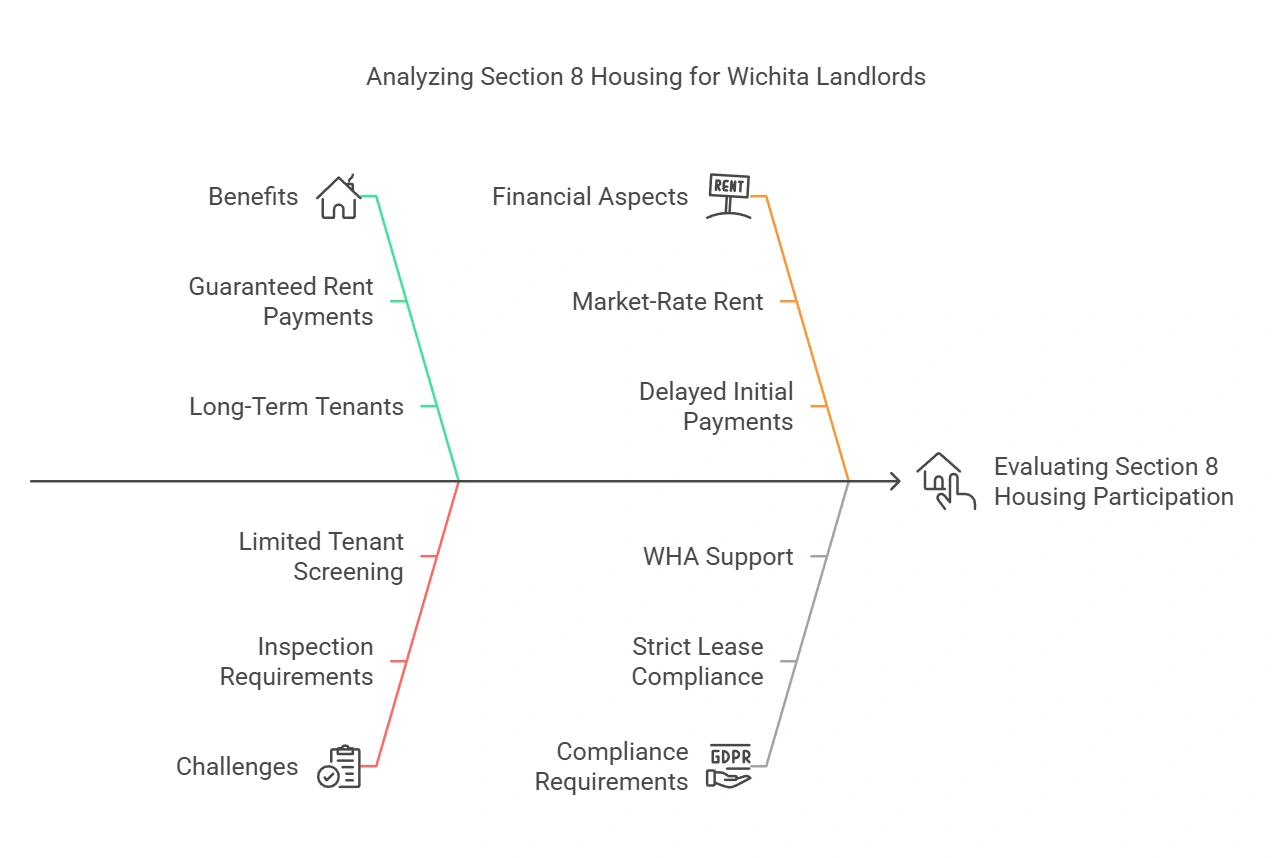
✔ Guaranteed Rent Payments – WHA pays a portion of the rent directly to the landlord each month, reducing the risk of missed payments.
✔ Lower Vacancy Rates – Many renters rely on Section 8, meaning properties in the program often have high demand.
✔ Long-Term Tenants – Section 8 tenants often stay longer due to the limited availability of affordable housing, reducing turnover costs.
✔ Market-Rate Rent – Landlords set their rent, as long as it falls within WHA’s fair market rent limits for the area.
✔ Support from WHA – Landlords have access to local housing authority support for lease agreements, tenant issues, and program compliance.
❌ Inspection Requirements – Properties must pass HUD inspections before tenants can move in. These inspections check for safety, sanitation, and basic living standards.
❌ Delayed Initial Payments – The first subsidy payment may take a few weeks as WHA processes paperwork and inspections.
❌ Limited Tenant Screening – Landlords must still screen tenants carefully, as WHA does not guarantee tenant behavior—only rent assistance.
❌ Strict Lease Compliance – Landlords must follow WHA’s lease terms, which include specific eviction procedures if issues arise.
While Section 8 has some extra steps, it can be a reliable option for landlords looking for consistent rent payments and long-term tenants in Wichita.
Becoming a Section 8 landlord in Wichita involves a few key steps to ensure your property meets HUD standards and is approved by the Wichita Housing Authority (WHA). Here’s how to get started:
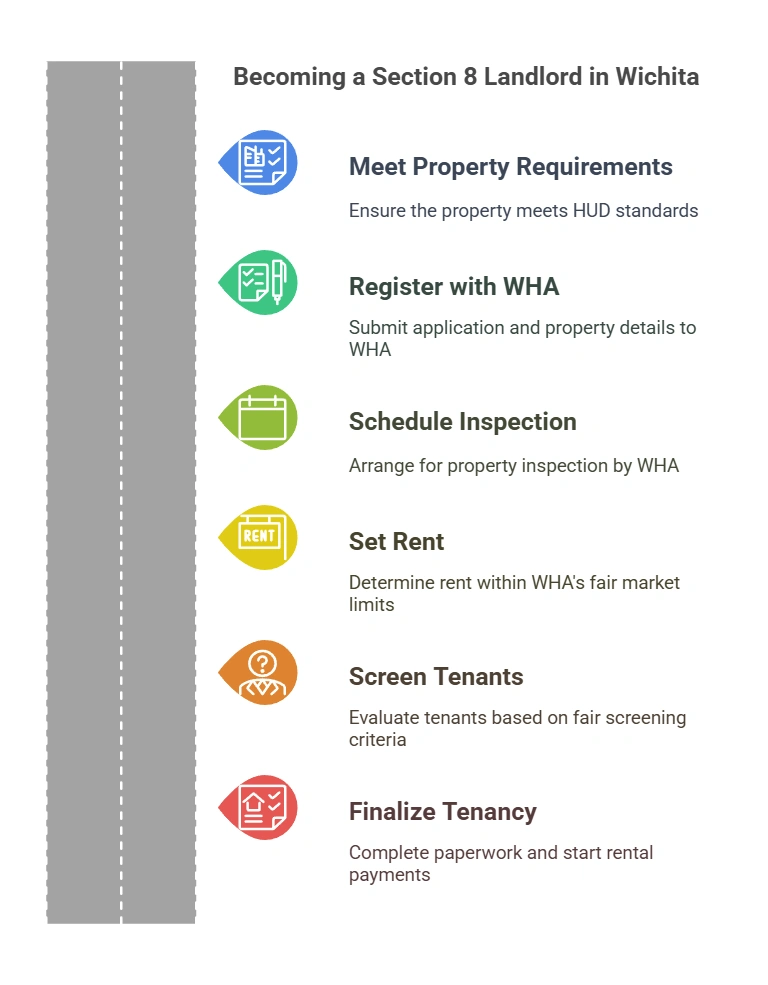
Before accepting Section 8 tenants, your property must pass a HUD Housing Quality Standards (HQS) inspection. This inspection ensures the home is safe, sanitary, and in good condition.
✅ Basic Property Requirements:
The WHA will schedule an initial inspection before a tenant moves in. Landlords must also pass periodic re-inspections to stay in the program.
Once your property meets HUD’s quality standards, you must register with WHA to list your rental for Section 8 tenants.
📝 Steps to Register:
After approval, your property will be listed for Section 8 tenants, and you can begin selecting renters.
Landlords still have the right to screen tenants under Section 8, but must follow Fair Housing Laws. WHA only provides rental assistance—it does not guarantee tenant behavior.
✔ Recommended Screening Criteria:
📌 Important: You cannot reject a tenant simply because they use Section 8, but you can decline based on valid screening factors that apply to all applicants.
Once you approve a tenant, WHA finalizes the paperwork, and payments begin. By understanding the process, landlords can benefit from reliable income while providing housing to families in need.
Before renting to a Section 8 tenant, your property must pass a Housing Quality Standards (HQS) inspection conducted by the Wichita Housing Authority (WHA). The goal is to ensure the home is safe, livable, and well-maintained.
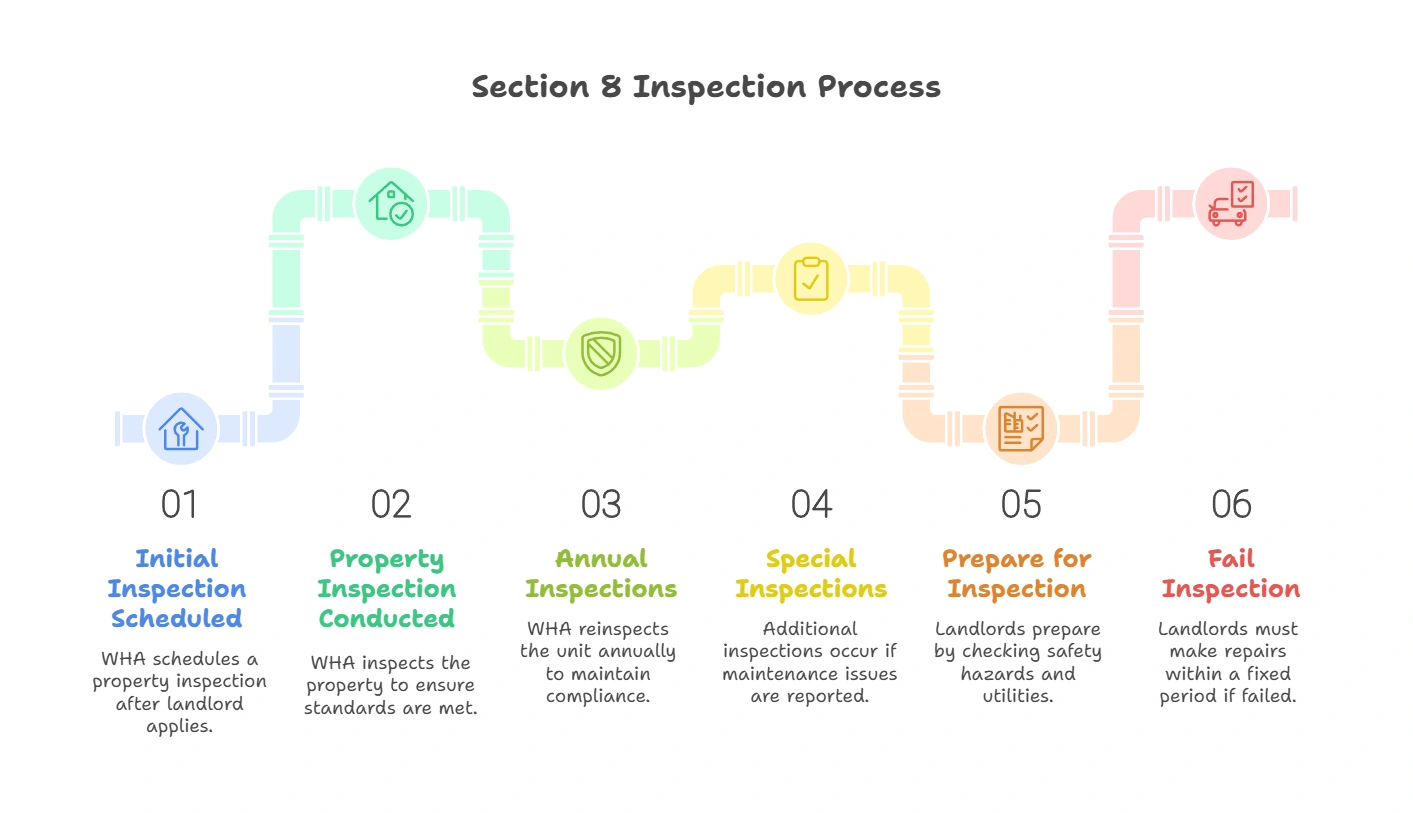
✅ Check for safety hazards (exposed wiring, broken locks, missing smoke detectors).
✅ Ensure utilities are working (running water, electricity, heating, and cooling).
✅ Repair any plumbing leaks (including sinks, toilets, and bathtubs).
✅ Remove pests (rodents, insects, or other infestations).
✅ Secure windows and doors (no broken glass, proper locks).
If the unit fails the inspection, the landlord has a fixed period to make repairs before the property can be approved. Staying proactive with maintenance can prevent delays in rent payments.
Many landlords hesitate to accept Section 8 tenants because of misconceptions about the program. Here’s the truth behind some of the most common myths:
🚫 Fact: The Wichita Housing Authority guarantees a portion of the rent is paid directly to the landlord on time every month. Tenants are responsible for their share, just like non-Section 8 renters.
🚫 Fact: Section 8 tenants must pass eligibility requirements, including income limits and rental history checks. Landlords also have the right to screen tenants using standard rental criteria.
🚫 Fact: Landlords can set their rent within fair market limits, and WHA ensures payments are competitive with private market rates.
🚫 Fact: While Section 8 requires inspections and paperwork, once approved, rent is stable, and properties tend to have lower vacancy rates.
By understanding the realities of Section 8, landlords in Wichita can make informed decisions and take advantage of a reliable rental income source.
Section 8 Housing gives Wichita landlords steady rental income while helping families in need. With guaranteed rent payments and lower vacancies, the benefits often outweigh the challenges.
By meeting HUD standards, registering with WHA, and screening tenants properly, landlords can make the most of this program. While inspections and paperwork take effort, the long-term financial stability makes it worthwhile.
📞 Need help managing rentals or finding investment properties? Contact us today for expert guidance on Section 8 housing, property management, and real estate opportunities in Wichita!