



Key Takeaways:
-
Get Pre-Approved First – A mortgage pre-approval shows sellers you’re serious and financially ready, giving your offer a competitive edge.
-
Make a Strong, Competitive Offer – Offer a fair price based on market data, include an earnest money deposit, and minimize contingencies to stand out.
-
Be Flexible and Strategic – Accommodate the seller’s timeline, write a personal offer letter, and consider waiving certain contingencies (if financially safe) to increase your chances of winning the home.
Buying a home is exciting, but making an offer can feel overwhelming, especially in a competitive market. You’ve found the perfect house, but how do you make sure your offer stands out? As a real estate agent with 10 years of experience,
I know how tough this process can be. Sellers get multiple offers, and you don’t want to lose your dream home over a small mistake. In this guide, I’ll share simple, effective steps to help you craft a strong, competitive home offer—one that gets noticed and accepted. Let’s make sure your next offer is the winning one!
"If you're shopping in a seller’s market, these tips for buying in a competitive market can give you the edge you need to compete."
Why a Strong Home Offer Matters
In a competitive real estate market, making a strong home offer can be the difference between securing your dream home and losing it to another buyer. Sellers are looking for serious buyers who present attractive offers with minimal risks.
By understanding how to make an offer that stands out, you increase your chances of getting the home you want.
8 Easy Steps to Making a Strong Home Offer
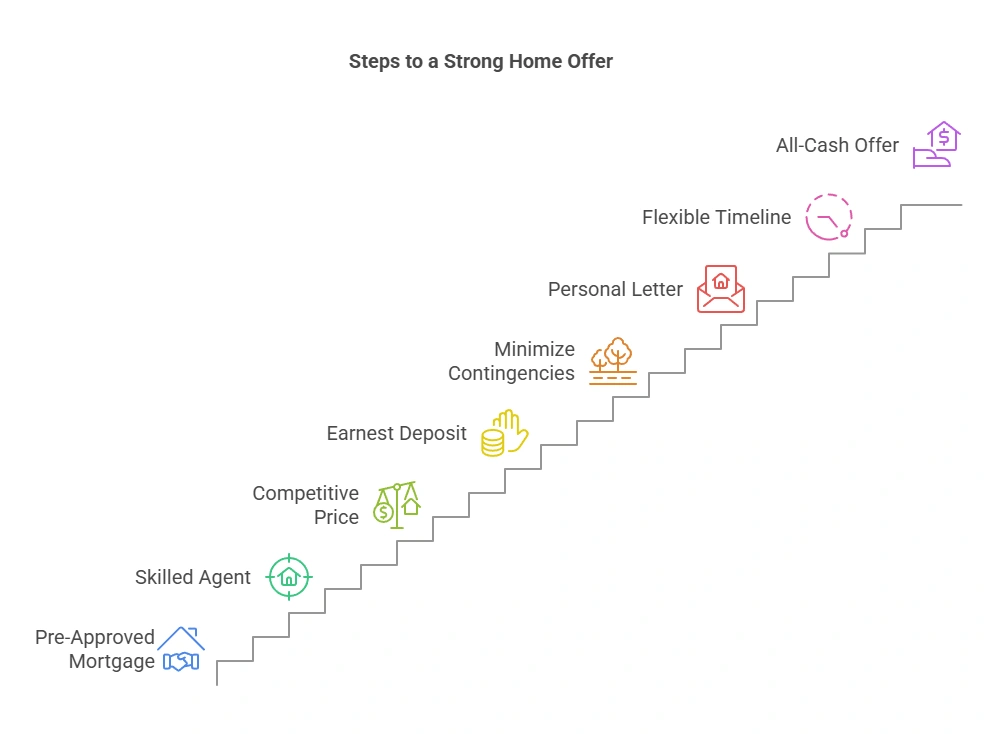
1. Get Pre-Approved for a Mortgage
A pre-approved mortgage shows sellers that you’re financially ready to buy a home. It also helps you determine your purchase price range so you don’t waste time on homes outside your budget.
How to Get Pre-Approved:
-
Choose a lender with competitive rates and strong customer service.
-
Gather financial documents such as proof of income, credit history, and tax returns.
-
Receive a pre-approval letter to submit with your home offer.
"Before you get pre-approved, it helps to learn about the different types of home loans so you can choose the right one."
2. Work with a Skilled Real Estate Agent
A knowledgeable real estate agent can help you make an informed decision, negotiate effectively, and guide you through the offer process. They have insights into local home prices, market conditions, and what sellers are looking for in an offer.
How a Real Estate Agent Can Help:
-
Find the right home based on your needs and budget.
-
Provide market data to determine the right offer price.
-
Help you craft a compelling offer that stands out from the competition.
3. Make a Competitive Offer Price
Your offer price should reflect market value while remaining competitive. If you bid too low, you risk being ignored by sellers, but overbidding may stretch your finances too thin.
How to Determine the Right Offer Price:
-
Compare recent sales of similar homes in the area.
-
Consider the home’s condition and any needed repairs.
-
Discuss with your agent whether an escalation clause may help in case of multiple offers.
4. Include an Earnest Money Deposit
An earnest money deposit (EMD) shows the seller you are serious about purchasing their home. The higher the deposit, the more attractive your offer becomes.
Typical Earnest Money Deposits:
-
Usually 1%–3% of the home’s purchase price.
-
Applied toward closing costs if your offer is accepted.
-
Protects the seller if a buyer backs out without a valid reason.
5. Minimize Contingencies
Sellers prefer offers with fewer contingencies, as these reduce the chances of delays or a failed sale. However, some contingencies are necessary to protect you as a buyer.
Key Contingencies to Consider:
-
Financing Contingency: Ensures you can secure a loan before committing.
-
Home Inspection Contingency: Protects you from unexpected repairs and hidden issues.
-
Appraisal Contingency: This prevents you from overpaying if the home appraises for less than the offer price.
6. Write a Personal Offer Letter
In competitive markets, an offer letter can help you connect with the seller on a personal level. Sharing your reasons for wanting the home may influence their decision.
What to Include in Your Offer Letter:
-
A sincere introduction about who you are.
-
Why you love the home and how it fits your family’s needs.
-
A polite closing statement expressing your appreciation.
7. Be Flexible with the Closing Timeline
Sellers may have specific needs regarding the timeline for closing and moving. Being flexible with your closing date can make your offer more attractive.
How to Be Accommodating:
-
Offer to close quickly if the seller is in a rush.
-
Allow extra time if they need to find a new home.
-
Work with your lender to expedite the mortgage approval process.
8. Consider an All-Cash Offer or Waiving Financing Contingencies
If possible, making an all-cash offer eliminates financing risks for the seller. If paying in cash isn’t an option, waiving certain contingencies (carefully) can strengthen your offer.
When to Consider Waiving Contingencies:
-
You have significant cash reserves.
-
You are confident about the home’s condition and market value.
-
Your agent and lender confirm it’s a wise financial move.
Final Thoughts
In today’s competitive housing market, a strong home offer is key to securing the property you want. By getting pre-approved, working with an experienced real estate agent, making a competitive offer, and being flexible with contingencies, you improve your chances of success.
Need expert guidance? Contact our team of real estate professionals today to help you make a winning offer on a house and find your dream home!
Frequently Asked Questions (FAQs)
What are the best tips on how to make an offer on a house that stands out?
How can I ensure my offer on a home is competitive?
What should I include in my purchase offer to increase the chances of it being accepted?
What does it mean to make a cash offer when trying to buy a house?
How should I decide how much to offer on a house in 2025?
What are some common mistakes to avoid when making your first offer on a home?
How can I make my offer stand out from the competition?
What does it mean if my offer on a house gets accepted?
What should I do if my first offer is not accepted?