New - 30 Mins Ago



$430,000
Active
--
Beds
--
Baths
--
Sqft
0.17
Acres
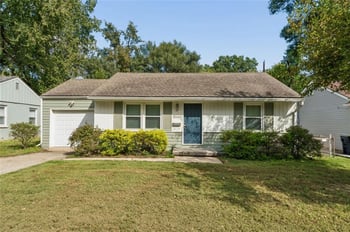
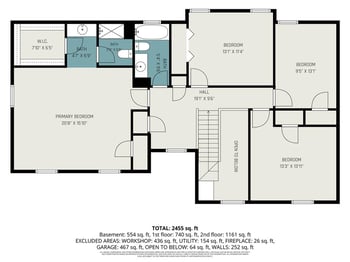
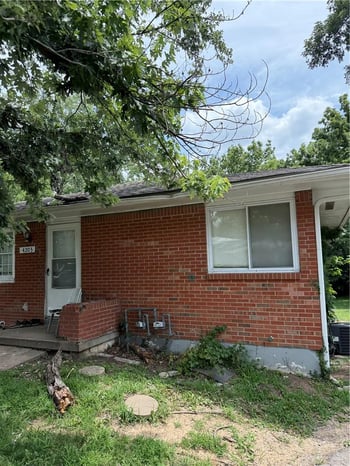
432-434 E 63rd Ter, Kansas City, MO 64110
MLS#: HMS2643337




If you live in Kansas City, Missouri, you generally owe the City’s 1% earnings tax on earned income even when you work outside KCMO. If you live outside KCMO, you generally owe the tax only on income earned from work performed inside Kansas City, Missouri.
That distinction can matter when you compare homes on opposite sides of the state line or even two homes that appear to be in the same general Kansas City area. The earnings tax follows your residence or where you perform the work—not the price of the home.
Kansas City’s earnings tax is a 1% tax on salaries, wages, commissions, tips, and other compensation.
If you are a KCMO resident: you generally owe the earnings tax on earned income even if your job is in Kansas or somewhere else outside Kansas City, Missouri.
If you are not a KCMO resident: you generally owe the earnings tax on income earned from work performed inside KCMO.
Those rules answer different questions. A move into KCMO can matter because of where you live. If you remain outside KCMO, the relevant question generally shifts to where you perform the work.
The earnings tax does not increase because you buy a more expensive home. It is also separate from your property-tax bill and is not a tax on the purchase price.
This is the rule homebuyers can easily miss when they focus on the Missouri-Kansas state line.
Suppose you buy a home inside Kansas City, Missouri, but commute to an office in Kansas. Working outside KCMO does not, by itself, remove you from the City’s general rule for residents.
A KCMO resident generally remains subject to the earnings tax on earned income even when the job is outside the city, subject to exemptions established by law or ordinance.
That means the home’s location can affect the comparison even when your workplace does not change. Someone deciding between a home inside KCMO and one outside the city may see similar mortgage estimates but a different take-home-pay question.
Whether your employer already withholds the tax is a separate payroll issue from whether the general resident rule applies.
The general rule for nonresidents is different.
If your home is outside Kansas City, Missouri, the City generally taxes income you earn from work performed inside KCMO city limits.
In that situation, the location of the work—not the location of your home—is what brings that income under the general nonresident rule.
That distinction becomes especially important when you are comparing Kansas City, Kansas with Kansas City, Missouri. The state line and the KCMO city boundary answer different questions.
A person can live in Kansas and still fall under the general nonresident rule for income earned from work performed inside KCMO. Conversely, living outside KCMO does not make all of your earned income subject to the City’s tax simply because some work occurs there.
A listing can show a Kansas City mailing address without proving that the home is actually inside Kansas City, Missouri city limits.
That matters when you are comparing a home near a municipal boundary. Before using the KCMO resident rule in your budget comparison, confirm which municipality the property is actually in. The City’s Parcel Viewer is a useful starting point when the boundary is not obvious.
The mailing city on the listing can help identify the property, but it should not substitute for confirming the municipality that governs the address.
Once you know which income is covered by the relevant KCMO rule, the rate can be translated into a simple planning amount.
The examples below show the annual amount and monthly equivalent of 1% for three income levels.
These examples apply only to wages or other earned income covered by the KCMO resident or work-location rule. They are arithmetic illustrations, not estimates of anyone’s final tax, and they do not account for exemptions, credits, income allocation, withholding, refunds, or other individual circumstances.
They also should not automatically be applied to combined household income.
Two earners in the same household can have different residence or work-location facts. One person might work inside KCMO while another works elsewhere, or two nonresident earners might perform different amounts of work inside the city. The useful comparison starts with each person’s circumstances rather than simply applying 1% to total household income.
For homebuying purposes, place the potential take-home-pay effect beside mortgage principal and interest, property taxes, homeowners insurance, HOA dues when present, utilities, and the other recurring ownership costs you are already comparing.
That gives you a more complete monthly picture than list price or an estimated mortgage payment alone.
You do not need to turn your home search into a tax exercise. Before treating two homes as financially equivalent, confirm the municipality, see whether KCMO withholding appears on your pay stub or W-2, and, if your situation involves an exemption, remote or hybrid work, or work performed in multiple locations, check the current City Tax FAQs and City tax forms or ask a qualified tax professional.
If you are browsing homes for sale in Kansas City, Missouri, bringing the earnings-tax question into the comparison before you make an offer can prevent a recurring cost from being overlooked.
For a KCMO home, the useful question is: What does becoming or remaining a KCMO resident mean for my take-home pay?
For a home outside KCMO when you work in the city, the question is different: What income do I earn from work performed inside KCMO?
No. The Kansas City earnings tax is tied to earned income under the KCMO resident or work-location rule, not the home’s purchase price or assessed value. Property tax is a separate cost tied to the property and local property-tax structure; see our guide to Kansas versus Missouri property taxes for that comparison.
Missing withholding does not, by itself, settle whether the earnings tax applies to you. Review your pay stub or W-2; for wage earners, the City’s Tax FAQs point to comparing local withholding in W-2 Box 19 with 1% of Box 1 when relevant, but treat that only as a reason to review the current City guidance or contact the Revenue Division—not as a self-determining tax test or filing instruction.
It can affect the analysis because the nonresident rule focuses on income earned from work performed inside KCMO. If you work in multiple locations, where the work occurred and the records supporting that schedule may matter, so use current City guidance or a qualified tax professional for your particular work pattern.
No; use the KCMO Parcel Viewer as the next step when the municipality is unclear.
This article provides general information, not tax or legal advice. Ask a qualified tax professional about how Kansas City’s earnings tax applies to your circumstances.
City of Kansas City, Missouri — Earnings Tax explains the City’s general earnings-tax rules for residents and nonresidents.
City of Kansas City, Missouri — Tax FAQs provides current City answers about earnings-tax questions, including withholding and other common situations.
City of Kansas City, Missouri — City Tax Forms provides the City’s current tax forms and related resources.
City of Kansas City, Missouri — Development Process Guide and KCMO Parcel Viewer provides City planning and parcel resources that can help when confirming whether a property is within KCMO.
A similar purchase price does not guarantee a similar monthly cash-flow result.
When you compare homes, look beyond principal and interest. Property taxes, insurance, association costs, utilities, and the potential earnings-tax effect can all influence how the monthly number feels in practice.
That matters most when the homes cross a city or state boundary but otherwise appear financially similar. Similar prices and mortgage estimates can still produce different household cash-flow results.
The earnings tax should be one line in the larger comparison, not the entire decision.
For a broader checklist covering financing and offer preparation, see the Urban Cool Homes buying process.
Before you treat similarly priced homes as financially equivalent, compare the complete monthly budget, including the recurring housing costs and any KCMO earnings-tax effect that fits your situation.