New - 5 Hours Ago
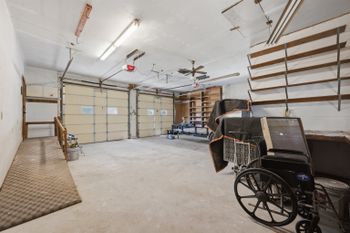
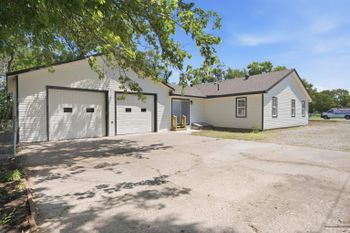
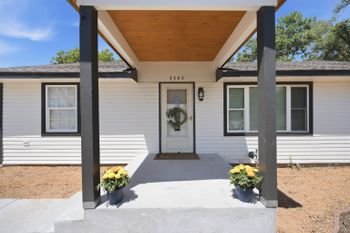




Get address-specific written insurance quotes before treating a Wichita house as affordable. Compare the coverage, deductible and payment after a covered roof loss—not just the annual premium.
Start these questions while you are still reviewing the house. That leaves time to compare the seller’s roof history with available records, meet insurer requirements and act within the deadlines in the signed contract.
Request written quotes for the exact address, using the same property and coverage details for each insurer. A general Wichita estimate cannot tell you what this house will cost to insure. The CFPB recommends comparing written quotes and sharing the quotes you are considering with the loan officer.
Ask the seller for the roof replacement date, material, invoice and any available records. Give that information to the insurer and ask what else it needs. A roof invoice can support the history, but it does not prove the roof’s current condition or guarantee insurance approval.
Also ask how the dwelling limit was calculated. That is the amount of insurance carried on the structure, and it should not be assumed to equal the purchase price.
Use Wichita’s permit lookup carefully. For a Wichita address, open the MABCD portal, select Continue Anonymously, and follow Building & Construction → Lookup Plan Review or Permit → Address. Search around the seller’s reported roof year, then compare available application dates, work descriptions and status with the invoice.
The public address form inspected October 11, 2026 offers All, In Progress and Closed status choices and instructs users to choose a 12-month date range. An older roof can fall outside a short search window, so try the reported year and nearby date windows rather than stopping after one search.
MABCD says the portal serves the City of Wichita and unincorporated Sedgwick County. Confirm the correct office for a house in a smaller city. An empty result does not prove that no work occurred, and an application record does not prove completion, current condition or insurer acceptance. When comparing Wichita homes, repeat this exact-address process for each property.
Place the written quotes next to each other and copy the same fields from each one. The annual premium is the recurring policy price. A deductible is what the policy requires the homebuyer to cover when a covered claim applies.
| Field | What to copy from each quote |
|---|---|
| Annual premium | Full annual amount, not only a monthly estimate |
| Dwelling limit | Amount of insurance carried on the structure |
| Other-perils deductible | Dollar amount and the covered losses to which it applies |
| Wind/hail deductible | Dollar amount, percentage and exact calculation basis |
| Roof settlement and conditions | Replacement cost or actual cash value, plus any separate roof terms |
| Exclusions and add-ons | Flood, sewer or drain backup, seepage and other relevant terms |
| Underwriting requirements | Inspections, repairs, documents or other items needed before the insurer will issue the policy |
| Quote validity and effective date | How long the quote remains available and when coverage would begin |
Kansas guidance explains that a wind or hail deductible may be calculated as a percentage of the insurance carried on the structure, while another deductible may be a stated dollar amount. There is no percentage to assume; read the actual quote and ask, “What would I owe if hail damages this roof?” See the Kansas Department of Insurance shopper’s guide.
Hypothetical deductible calculation: If a quote expressly uses a 2% wind/hail deductible based on $300,000 of dwelling coverage, the deductible is 0.02 × $300,000 = $6,000. This is only an arithmetic example—not a Wichita average, requirement or recommendation. The basis is the stated dwelling coverage, not the purchase price, annual premium or repair estimate.
Ask the insurer to show exactly how it would settle a covered wind or hail roof claim. A low premium can still come with a large deductible or a settlement that subtracts depreciation.
Replacement cost generally values covered roof damage without subtracting depreciation, subject to policy limits, conditions and the deductible. Actual cash value, or ACV, subtracts depreciation. The NAIC’s July 22, 2021 explainer describes the difference.
Replacement cost does not mean a free new roof. Ask which deductible applies and whether the roof has separate terms based on its age, material or condition. Do not assume one insurer’s answer applies to another quote.
An endorsement is a written change to the policy. If the roof settlement or deductible appears in an endorsement, ask the insurer to provide it and explain it in plain language. A seller’s invoice, permit record or inspection can help document roof history, but none promises a particular claim payment.
Ask three different questions: “Do I need separate flood insurance?” “Can I add sewer or drain backup coverage?” and “How does this policy treat seepage?” These are different causes of water damage and should not be grouped under one yes-or-no question.
Kansas insurance guidance identifies rising-water flooding and sewer backup as typical homeowners-policy exclusions and recommends asking what water damage is and is not covered. Review the Kansas home and renters guidance and the state shopper’s guide before comparing terms.
For rising water, obtain a separate flood insurance quote if coverage is required or selected. For sewer or drain backup, ask whether an endorsement is available, what limit it provides and what deductible applies. Ask separately about seepage, groundwater and repeated water intrusion. Do not assume a backup endorsement covers flood or seepage.
The City of Wichita Floods page links to FEMA maps and labels the linked floodplain boundaries as effective December 22, 2016. Ask the lender what it used for the specific house and whether later mapping or amendments affect its determination. The City notes that even a FEMA map amendment does not stop a lender from requiring flood insurance. A flood map also does not decide whether an insurer covers basement seepage or another water source.
Send the final homeowners quote—and any flood quote that is required or selected—to the loan officer before closing. Ask the lender to check the monthly payment, cash needed at closing, policy effective date and proof-of-coverage requirements against the actual quotes. The CFPB’s insurance-shopping guidance recommends coordinating the quotes under consideration with the loan officer.
Ask the plain question: “Does the lender’s monthly total already include homeowners insurance?” If it does, do not add another monthly insurance estimate without having the loan officer check the numbers.
Mortgage documents can show several insurance-related amounts for different purposes:
All three can appear without being duplicate charges. The CFPB Closing Disclosure explainer treats prepaids, initial escrow funding and ongoing estimated escrow as separate items. Ask the loan officer to explain each line rather than removing one simply because it also relates to insurance. Include the actual premium and payment terms for any flood policy in the same review.
The signed contract determines the deadlines and cancellation rights. An insurance issue does not automatically let a homebuyer cancel or recover earnest money. Ask the real estate agent about contract dates, an attorney about legal rights, the licensed lender about payment figures and the insurance professional about policy terms early enough to respond.
Insurance is only one part of reviewing a property. Use the guide to what to look for when buying a Wichita house. For a newly built house, compare insurance with the other items covered in the Wichita new-construction monthly-cost guide.
Do not call a Wichita house affordable until the written quote, roof-loss math, water coverage and lender’s final numbers work for that address.