New - 30 Mins Ago
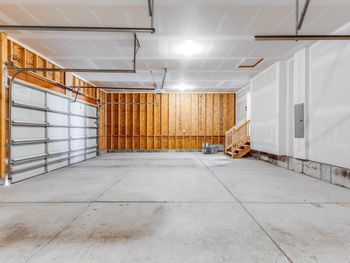
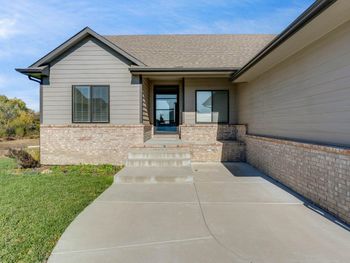
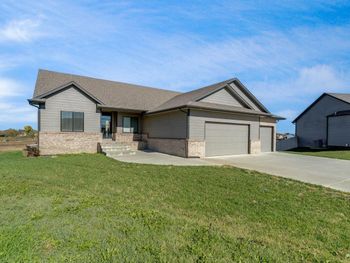




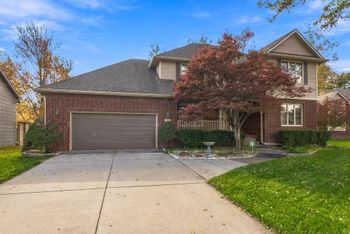
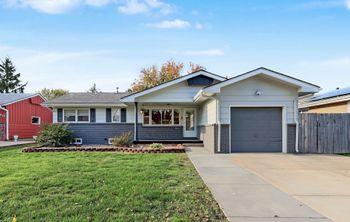
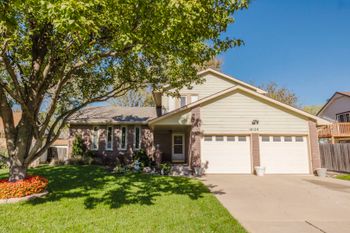
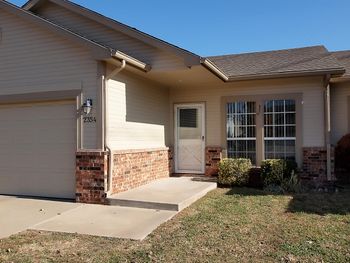
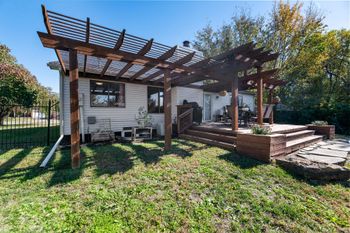
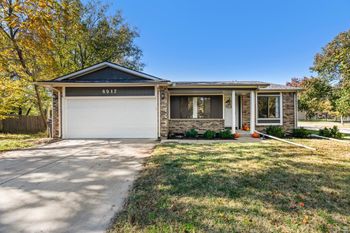
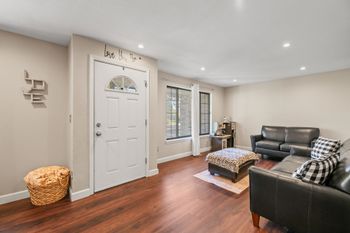
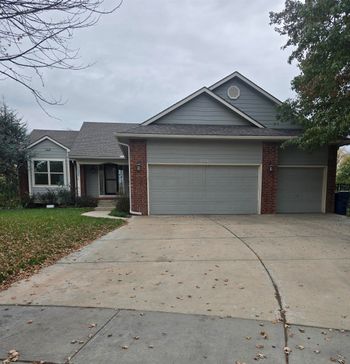
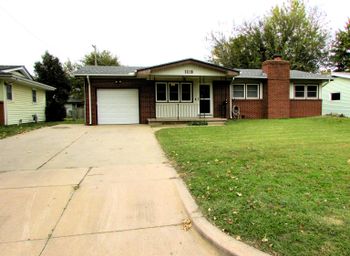
Cover illustration: A brick-and-siding ranch-style home beneath autumn trees, with pink Urban Cool Homes and LPT Realty branding and the words “Before You Buy” and “What to Check in a Wichita Home.” The home is illustrative, not an identified property.
A house can win you over before you've even seen the utility room. The kitchen feels right, the backyard has room for your plans, and you're already picturing where the furniture will go.
But liking a house and understanding what you're buying are two different things.
That attractive finished basement might need a closer look. A quiet street on Sunday afternoon might sound different during your morning routine. And a house priced within your budget could come with special assessments or repairs you haven't accounted for.
Knowing what to look for when buying a house in Wichita means asking better questions at each stage. Start with how you'll live in the home. Notice conditions that deserve investigation. Check the records and costs attached to the address. Then use independent inspections and your actual purchase agreement to decide which uncertainties you're willing to accept.
Start with an ordinary Tuesday, not a special occasion.
Imagine getting everyone out the door in the morning. Are the bedrooms and bathrooms arranged sensibly? Can you carry groceries from the parking area into the kitchen without navigating awkward stairs? Is the laundry convenient, and is there enough storage for the things you use regularly?
A spare room might look perfect in listing photos but prove too small for a desk and your work equipment. A large backyard may be exactly what you want, provided you're comfortable with the upkeep. A finished basement adds usable possibilities, but its layout, access, and condition still need to suit your plans.
Consider pets, mobility needs, parking, outdoor maintenance, and any changes you'd want to make. Separate what already works from what must change before moving in. A renovation you hope to complete someday is different from one you need immediately.
Then look beyond the house.
A short drive to the property isn't necessarily representative of your weekday commute. If your regular route involves Kellogg Avenue (U.S. 54), K-96, or school drop-offs across town, try the actual trip at the time you'll normally travel.
The same applies to neighborhood sound.
For example, if you're considering a west-Wichita home around Reflection Ridge and are concerned about nearby rail activity, investigate the location of the tracks and visit at times relevant to your household. Listen from inside and outside the property.
You can't establish a train schedule, typical noise level, or future traffic pattern from one showing. Nor should you assume every property in the surrounding area has the same conditions.
A house that works beautifully indoors still needs to fit the life you'll lead outside its walls.
School questions deserve more than a quick glance at a listing.
In Maize Unified School District 266 (USD 266), for example, elementary school placement is determined administratively using factors that include enrollment, class size, and siblings. Intermediate, middle, and high schools use the district's address-based boundary map.
That means identifying a nearby elementary school, or even knowing the district, isn't enough to confirm where a particular child will attend.
Contact the responsible district with the exact property address and student's grade. Confirm the applicable placement process rather than assuming a listing or map marker establishes enrollment eligibility. School assignment also shouldn't be mistaken for a judgment about school quality.
By the end of your tour, you should know which parts of daily life fit immediately and which depend on answers, improvements, or compromises.
Before you head to an open house, look over the listing and make a quick list of questions or features you want to check. Keep it on your phone or bring a notepad, and grab a tape measure if you're wondering whether your couch will fit.
Suppose you notice a brown stain near a window. It could be evidence of an old leak that was repaired. It could reflect a continuing moisture problem. From the stain alone, you don't know.
The useful question isn't whether the stain proves the house has a serious defect. It's what caused it, when it appeared, what was done, and whether supporting documentation exists.
That approach works for many visible concerns.
Water and drainage deserve attention. Look at gutters, downspouts, ground slopes, musty-smelling spaces, and areas with visible staining. Ask whether water has entered the house and where runoff travels during heavy rain.
A dry basement during your showing doesn't establish that it has always stayed dry.
Pay attention to floors, walls, and openings. Uneven surfaces, cracks, and sticking windows or doors are worth documenting. They can have different explanations, and their significance depends on the actual condition and professional evaluation.
Ask about the roof and major systems. Find out when the roof was installed and whether invoices or warranties are available. Ask about the age, maintenance, and repair history of heating, cooling, plumbing, and electrical components.
Visible wear can help you identify questions, but it doesn't tell you how much useful life a system has left.
Look closely at changes to the house. A recently painted area, patched wall, converted room, or altered electrical fixture may have a perfectly ordinary explanation. Ask when the work occurred, who completed it, and whether relevant permits, invoices, or inspections are available.
Likewise, damaged wood or apparent pest activity deserves further investigation rather than an immediate conclusion about its cause.
There is an important boundary here: observation is not diagnosis.
A crack isn't automatically evidence of foundation failure. Fresh paint doesn't prove someone concealed damage. And an attractive renovation doesn't guarantee that everything behind the finished surfaces was installed properly.
Record what you saw and ask for available information. Let a qualified inspector or specialist evaluate concerns requiring technical judgment.
During the showing, stay in normally accessible areas. Don't climb onto the roof, enter unsafe or inaccessible spaces, open electrical panels, or dismantle equipment yourself.
You are gathering questions to raise with the seller and qualified professionals, not performing your own home inspection.
Imagine touring a home with a beautifully finished basement. The listing includes the space in its description, and the seller explains that it was remodeled several years ago.
Before relying on the listing's description of the finished basement, compare the visible renovation with available records and ask what work was performed, whether permits were required, and what documentation exists.
The same questions apply to additions, converted garages, altered floor plans, and major system replacements.
Start by identifying the authority responsible for the property's address.
The Metropolitan Area Building and Construction Department (MABCD) serves Wichita and unincorporated Sedgwick County.
For certain participating smaller cities, permitting begins with the municipality. Other nearby jurisdictions may operate under different processes.
That matters because a home described as being in the Wichita area isn't necessarily governed by the same permitting office as a house within Wichita city limits.
For an address under MABCD's jurisdiction, its public permit lookup allows searches of available records. Compare relevant project descriptions, work dates, permit status, and any claimed final inspections with the changes you see at the property.
If the records don't appear to match, ask the responsible authority what the available history establishes and whether additional records can be obtained.
Don't jump from a missing online entry to an accusation of illegal construction. An online database may not contain a property's complete historical record.
The reverse caution matters too. An issued permit doesn't guarantee the work's present condition or workmanship.
Records help answer what was documented or authorized. An independent inspection addresses the condition of accessible components today.
The yard you can see isn't necessarily the same thing as the land you can legally use without restrictions.
If your plans involve a fence, detached workshop, substantial landscaping, or another improvement, investigate boundaries, recorded easements, applicable land-use rules, and homeowners association (HOA) restrictions where relevant.
A listing description or visual estimate of the lot isn't a substitute for the actual recorded documents. Depending on the question, you may need a qualified surveyor, the responsible local authority, or an attorney.
The point isn't to investigate every imaginable future project. It's to verify the ones that materially affect why you're buying this particular house.
Two houses can have similar asking prices and very different ownership expenses.
One might need immediate roof work. Another could carry special assessments for infrastructure improvements. A third may have association charges or insurance terms that change the monthly calculation.
That's why a general Wichita housing-cost estimate isn't enough. Use records and current quotes for the address you're considering.
For property in Sedgwick County, the county's property tax application provides appraisal information, real-property special assessments, tax information, and payment history.
Read the dates associated with the entries. Tax figures, appraisal information, and payments may represent different periods. A county appraised value isn't the negotiated purchase price, and it doesn't establish the building's condition.
One particularly useful local question involves special assessments, commonly called specials.
The Sedgwick County Treasurer explains that these are additional assessments against real property for improvements such as streets, sewers, and sidewalks. They may be billed over multiple years unless prepaid.
Here's the distinction to watch for.
An annual tax bill may already include the current special-assessment charge. Separately, records may show an outstanding obligation associated with that assessment.
Those are not two identical annual expenses.
Confirm whether the tax total includes specials, what remains unpaid, and how the obligation or payments will be handled at closing. Use the property-specific documents and transaction professionals to establish the amounts.
Otherwise, you could count the same charge twice—or overlook a remaining obligation.
Also remember that historical taxes don't guarantee the amount of a future bill.
Before relying on an estimated monthly payment, request a homeowners insurance quote for the exact property.
Ask what is covered, which exclusions apply, and how the deductibles work. Pay particular attention to any wind or hail deductibles and the terms actually offered.
Flood exposure deserves a separate conversation.
FloodSmart provides FEMA flood-mapping and insurance resources and explains that most homeowners insurance policies don't cover flooding.
Check the address, then discuss available flood coverage, premiums, and applicable financing requirements with the insurer and licensed lender.
A lower-risk mapped flood designation doesn't guarantee a property will never flood. A lack of known prior claims doesn't eliminate the possibility either. And a flood map alone can't tell you the final insurance price.
Find out about HOA dues, known assessments, and transfer-related charges if the property is part of an association.
Confirm the utility providers and service arrangements. A home with a private well or onsite wastewater system may require different investigation and ongoing maintenance from one using municipal services.
For repairs or improvements you expect to make, obtain qualified estimates. Include the closing and moving expenses identified by the professionals handling the transaction.
This is where the distinction between liking a home and affording its obligations becomes clearer.
A house needing work isn't automatically a poor choice. But the work should be understood well enough that you can decide whether the purchase price and expected costs still make sense.
If your question is broader—whether your household is financially or personally ready to buy—our guide to deciding whether now is the right time to buy a home in Wichita covers those separate considerations.
Your tour identifies concerns. A home inspection helps evaluate accessible conditions using a defined professional scope.
Those are different responsibilities.
The Consumer Financial Protection Bureau (CFPB) recommends arranging an independent inspection early enough to allow additional investigation if needed.
Before hiring an inspector, ask about qualifications, the standard used, which systems and areas are included, and what falls outside the inspection. Request a sample report and ask how inaccessible areas and recommendations for specialist follow-up are documented.
Ask the inspector whether attendance can be arranged and, if so, how you can discuss observations and findings during the visit.
The American Society of Home Inspectors Standard of Practice describes a visual inspection of readily accessible installed systems and components at the time of inspection.
It applies to inspections performed under that standard; it isn't a universal Kansas requirement for every inspector.
A general inspection isn't a warranty or a guarantee that every concealed defect will be found. It doesn't predict the exact remaining life of every component, establish complete code compliance, or automatically include every environmental and specialty test.
Suppose the inspector identifies moisture staining but can't see behind the finished wall. The report can describe the observation and may recommend further evaluation. It can't necessarily establish the full condition of concealed materials.
That limitation matters as much as the visible finding.
Ask what wasn't inspected and why. If a significant concern remains unresolved, find out which qualified specialist can investigate it.
A structural concern may call for a structural engineer. A roof issue may justify evaluation by a qualified roofing contractor. Questions involving pests, moisture, or underground sewer components may need different specialists or tests.
Not every house needs every specialty inspection. The appropriate follow-up depends on the property's features, observations, and available records.
The timing matters too. A specialist's recommendation is much more useful when your agreement still allows time to obtain and act on the findings.
Radon is a gas that can accumulate indoors at dangerous concentrations and pose a health risk. A visual walkthrough can't tell you whether a particular home has elevated levels.
Kansas requires residential property-sale contracts to include radon-notification language, and sellers must disclose known elevated radon concentrations.
The Kansas Department of Health and Environment recommends testing before purchase or occupancy. Professional radon testing and mitigation services require state certification.
Those requirements don't mean every Kansas home sale must include a completed radon test. They do mean radon deserves a deliberate decision rather than an assumption that the general inspection covers it.
For most housing built before 1978, federal lead-based paint disclosure requirements also apply, subject to specified exceptions.
Required information about known lead hazards, available reports, and the prescribed pamphlet must be provided before signing. Buyers generally receive a ten-day opportunity for inspection or risk assessment, although the parties can change that period in writing or the buyer can waive it.
Disclosure doesn't mean a new test has been performed or that existing hazards have been removed.
When age or property features raise a question, establish which disclosure requirements and evaluations apply rather than treating every house alike.
A house may have a well used only for landscape irrigation. That can still matter when the property changes hands.
Under the City of Wichita's water-well requirements, all wells on properties within city limits require title-transfer inspection, including irrigation wells. Where well water is used for personal use, water testing is also required.
Confirm the applicable requirements with Wichita Environmental Health and the responsible professionals before transfer.
Do not assume the same rule applies throughout unincorporated Sedgwick County or every nearby municipality. For a property outside Wichita city limits, ask the responsible authority what its requirements are.
Similarly, if the home uses a septic or other onsite wastewater system, determine which qualified evaluation is appropriate and whether any jurisdiction-specific requirements apply.
These checks are easier to arrange when identified early, especially if your contract sets a limited investigation period.
A house can pass through the financing appraisal process and still have condition problems worth investigating.
That's because an appraisal and a home inspection serve different purposes.
An appraisal addresses value for the financing process. A lender generally requires a valuation and may also impose property-condition standards, but that doesn't turn the appraisal into a comprehensive inspection.
There is another possible complication: the appraised value may be lower than the agreed purchase price.
As the CFPB explains, a low appraisal can affect financing and the amount of cash needed. The seller isn't automatically required to reduce the price.
Review the appraisal and ask your licensed lender what options are available under the loan. Your purchase agreement and applicable law determine any corresponding contractual rights.
A repair credit negotiated after an inspection also doesn't automatically satisfy a lender's property requirements. Financing approval and negotiated repairs are related but separate questions.
For more on the broader financing process, see our guides to getting mortgage preapproval in Wichita and comparing first-time homebuyer mortgage options.
For the property you're considering now, the immediate question is what its condition, valuation, and your actual loan terms mean for the transaction.
Imagine the inspection identifies a potentially significant roof issue. The inspector recommends evaluation by a roofing specialist, but your contract's investigation deadline is approaching.
You now have two problems to solve: understanding the roof's condition and determining what your agreement allows you to do about it.
The second question is just as important as the first.
A contingency is a condition written into the purchase agreement. It may provide particular options when a specified issue arises, but those rights depend on the signed contract, its addenda, and applicable law.
Before signing—and again whenever a deadline approaches—make sure you understand:
Which inspection, financing, appraisal, or other contingencies are actually included.
When inspections, specialist evaluations, and required documents must be completed or delivered.
How objections, requests, or notices must be prepared and delivered.
What options exist for repairs, credits, renegotiation, or cancellation under the circumstances.
What happens if a deadline is missed, and how earnest money (your purchase deposit) is treated under the available options.
Don't assume Kansas transactions all have the same inspection period or cancellation rules.
Finding a defect doesn't automatically entitle a buyer to seller-paid repairs, a reduced price, cancellation, or an earnest-money refund.
The seller may agree to repairs or a credit. The parties might negotiate another solution. But what a buyer can demand or do if an agreement isn't reached depends on the actual contract and law.
Ask your real estate agent to help keep the transaction requirements organized, and consult an attorney for questions about legal rights or contract interpretation.
The Kansas Real Estate Commission's consumer guidance explains that real estate licensees must disclose known adverse material facts and known information contradicting written reports.
That obligation doesn't mean a licensee independently investigated every part of the property or discovered all hidden defects.
The Commission also doesn't regulate the disclosure obligations of unlicensed sellers. Don't assume every seller must complete the same disclosure form or that a disclosure document guarantees the property's condition.
Review the information provided for the particular transaction, follow up on contradictions or omissions, and seek legal advice where obligations are disputed.
Buyers sometimes assume that if a transaction doesn't close, the deposit will simply be returned according to their understanding of the contingency.
It may not be that straightforward.
For broker-held earnest money, Kansas Real Estate Commission guidance identifies release at closing, by written agreement of both parties, or by court order. Third-party escrow holders have their own release requirements.
That distinction matters even when one party believes the contract supports returning the funds.
Understand both the contractual entitlement and the process for releasing the money before depending on a particular outcome.
By the end of your evaluation, you'll probably have several kinds of information: your tour notes, the seller's documents, permit and tax records, insurance quotes, inspection findings, and possibly specialist opinions.
Don't measure your progress by how much paperwork you've collected. Measure it by how many important uncertainties you've resolved.
Keep one short follow-up record for the property. For each unresolved issue, identify what needs an answer, who can provide reliable information, and the contract date or time by which you need it.
A water stain may need an inspector's evaluation. An addition may require clarification from the permit authority. A special-assessment question may call for tax and closing records. A disagreement about your right to terminate belongs with the actual contract and, when necessary, an attorney.
Then consider the tradeoff.
Maybe the house needs work, but the location and layout make that worthwhile. Perhaps the numbers still work after a qualified repair estimate. Or an unresolved condition may create more uncertainty than you're comfortable accepting.
Those are decisions about your priorities and the particular property—not judgments that every buyer must make the same way.
If you're looking at how this evaluation fits into the complete process, our first-time homebuyer guide to buying in Wichita explains the broader sequence. You can also learn what a Wichita real estate agent does for buyers and sellers and how that role fits with inspections, lending, and other professional advice.
If you'd like help organizing the questions surrounding a particular purchase, contact Urban Cool Homes.
You don't need a house with no uncertainties. You need enough reliable information to understand what you're buying, what remains unresolved, and whether the property and purchase agreement work for you.
This article is for general information and does not provide legal, tax, inspection, insurance, or lending advice. Consult the appropriate qualified professionals about your property and transaction.