


Wichita vs Kansas City: Which Kansas Market Should You Buy Into in 2026?
TLDR
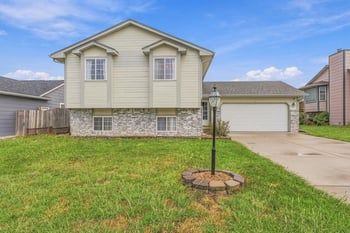
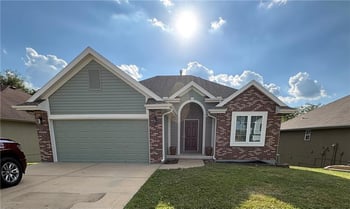
If you're choosing between Wichita and Kansas City in 2026, you're choosing between two markets that look almost nothing alike. Wichita's median sits around $249,950 with prices down 9.2% year over year and inventory climbing. Buyers finally have leverage they haven't had in four years. Kansas City's median is $320,711, prices climbed 5.2% in 2025, and it was named a top-10 U.S. housing market by both NAR and Zillow heading into 2026. One market favors value buyers. The other rewards appreciation buyers. There is a right answer for you. It just depends on what you actually want.
Introduction
Wichita and Kansas City aren't just different markets right now. They're telling opposite stories.
If you ask most Kansas agents which market is better for buying in 2026, you get an answer shaped by the one market they sell in. A Wichita agent talks up affordability and leverage. A Kansas City agent talks up appreciation and World Cup momentum. Both are right about their market. Neither is answering the actual question.
Urban Cool Homes is one of the only brokerages actively working both Wichita and Kansas City. That means this comparison isn't theoretical for us. We close deals in both markets every month. We've walked sellers out of one and into the other. Below, we lay both markets side by side, tell you honestly which kind of buyer wins where, and give you a framework to figure out the right answer for your situation. No spin toward either market. This post is useless if it's not honest.
Key Takeaways
- Wichita median list price is around $249,950, down 9.2% year over year, with inventory up roughly 15% and buyer leverage at a four-year high
- Kansas City median sales price is $320,711, up 5.2% in 2025, with NAR and Zillow both ranking it a top-10 U.S. housing market for 2026
- Wichita favors value buyers, first-time buyers, military families near McConnell AFB, and investors seeking cash flow
- Kansas City favors appreciation buyers, professionals relocating for job growth, move-up buyers with equity, and investors betting on long-term fundamentals
- Redfin migration data confirms Kansas City is the single most popular destination for Wichita home searchers, and the dual-market move is a real 2026 play
The Two Markets, Side by Side
The clearest way to cut through noise is to put the numbers next to each other.
| Metric | Wichita | Kansas City |
|---|---|---|
| Median price | $249,950 (down 9.2% YoY) | $320,711 (up 5.2% YoY) |
| Days to pending | 9 days | 30-45 days typical |
| Sale-to-list ratio | 98.4% | 97.4% |
| Inventory trend | Up ~15% | 2.2 months supply (tight) |
| Market momentum | Softening, buyer leverage | Top-10 nationally (NAR, Zillow) |
| Major market driver | Spirit AeroSystems transition | World Cup, Panasonic, streetcar |
Sources: Zillow and Heartland MLS data through early 2026. NAR and Zillow 2026 top-10 market rankings. WSU Center for Real Estate.
Read that table carefully. Wichita homes still go pending in 9 days at 98.4% of list price. That's not a weak market. It's a market where prices have softened, but demand for well-priced homes hasn't disappeared. Kansas City is tighter on inventory and moving upward. Different pressures. Different opportunities.
What Kind of Buyer Wins in Wichita Right Now
If you're in one of these categories, Wichita is probably the better 2026 move:
- Value buyers and first-time buyers. You were priced out between 2021 and 2023 and watched the market pass you by. You now have options again. Multiple offer situations are rarer. You can negotiate on condition. You can write contingencies.
- Upsizers looking for more house for their money. On a $250K budget in Wichita, you get significantly more square footage and land than the same dollars buy in Kansas City.
- Military families near McConnell AFB. Stable demand, reliable rental pool when you PCS, and a housing stock that matches base-adjacent lifestyle needs.
- Cash flow investors. Lower entry prices plus solid rental demand put Wichita in positive cash flow territory that Kansas City rarely offers at comparable price points.
Our recent breakdown of the Spirit AeroSystems transition and what it means for Wichita buyers goes deeper on the 2026 Wichita thesis.
What Kind of Buyer Wins in Kansas City Right Now
Kansas City rewards a different kind of buyer:
- Appreciation buyers. Fannie Mae projects 2 to 4% annual price growth in KC through 2027. You're buying into a market that's growing, not stabilizing.
- Professionals relocating for job growth. The Panasonic EV battery plant is adding 4,000 direct jobs. Healthcare, logistics, and tech are all expanding. The relocation inflow is real and measurable.
- Move-up buyers with equity. If you're sitting on 2019-era equity in another market, Kansas City still offers relative value compared to Denver, Minneapolis, or Dallas. You move up in quality and neighborhood without moving backward in price.
- Luxury buyers from pricier metros. A $900K home in Kansas City is a noticeable step up from a $900K home in Denver or Austin.
- Investors targeting the streetcar corridor. The Main Street Streetcar Extension opened in October 2025 and is already changing neighborhood premiums in the Plaza, Westport, and Midtown.
Is Wichita or Kansas City More Affordable in 2026?
Wichita. Not close.
The headline difference is roughly $70,000 on a median home. But the actual cost gap is wider once you factor in everything around the purchase.
Property tax math on the Kansas side versus the Missouri side of Kansas City matters for anyone making the move. Kansas assesses residential real estate at 11.5% of market value. Missouri assesses at 19%. That's not the tax rate, that's the assessed portion the tax rate is applied to, which means identical-value homes on opposite sides of State Line Road can produce different tax bills. Jackson County, Missouri's effective rate runs around 1.11%. Overland Park and Leawood on the Kansas side typically produce lower effective bills on the same value home. This matters if you're relocating to the KC metro and trying to decide which side of the state line to land on.
The down payment math: 20% down on Wichita's $249,950 median is $49,990. 20% down on Kansas City's $320,711 median is $64,142. That's $14,152 of additional cash at closing, plus higher monthly payments on the larger loan. For a first-time buyer or dual-income family with limited savings, that gap is often the difference between buying in 2026 and waiting another year.
The Migration Reality: People Are Moving Wichita to Kansas City
This is the part most local agents don't tell you. Redfin's migration search data shows Kansas City is the single most popular destination among Wichita home searchers. Not Dallas. Not Denver. Kansas City.
Why? A bigger job market, more urban amenities, higher long-term appreciation, better connectivity to national air travel and downstream metros. What do they miss after moving? Lower cost of living, a tighter community, more house for the money, and easier commutes.
This is also one of the specific situations Urban Cool Homes is built to handle. Selling in Wichita, buying in Kansas City, and coordinating both closings with a single team that actually knows both markets is not a service most Kansas brokerages can deliver. A Wichita agent refers you to someone in Kansas City and hopes for the best. A Kansas City agent tells you to find a Wichita agent to list your current home. We close both sides.
The Dual-Market Investor Case for 2026
Smart Kansas real estate investors in 2026 aren't picking one market. They're considering a split portfolio.
| Strategy | Wichita Role | Kansas City Role |
|---|---|---|
| Primary benefit | Cash flow | Appreciation |
| Entry price | Lower (~$250K median) | Higher (~$320K median) |
| Cap rate ballpark | B-class ~4.92%, C-class ~5.38% | Compressed, lower than Wichita |
| Rental demand driver | WSU, McConnell AFB, healthcare | Panasonic, relocation, STR premiums |
| Time horizon | Income-now, 5-10 year hold | Growth-focused, 7-10+ year hold |
Investor framework based on 2025 Heartland MLS and Zillow data, CBRE multifamily cap rate benchmarks, and Fannie Mae 2026 appreciation forecasts.
Wichita pays you monthly. Kansas City pays you on the sale. The investor who runs both is hedged against a downturn in either market and captures income and appreciation at once. That's a real strategy, and it's only realistic if your agent operates in both places.
How to Decide Which Market Is Right for You
No sales pitch here. Honest framework instead.
- Start with your goal, not the market. If your goal is "own a home for the first time on a tight budget," Wichita. If your goal is "build equity quickly in an appreciating market," Kansas City. If your goal is "balanced real estate portfolio in Kansas," both.
- Check your timeline. If you need to be in a home in 90 days with a limited down payment, Wichita's inventory and price point make it easier to close fast. If you have 12 months and flexibility, Kansas City's spring 2026 window is strong.
- Factor in your career. If your industry is concentrated in KC (healthcare, logistics, tech, corporate relocations) or your employer is expanding there, the career math favors KC. If you're in aerospace, healthcare, or WSU-adjacent work in Wichita, the career math favors staying local.
- Think about a 10-year horizon. Which market do you want to own a home in ten years from now? Both have strong cases. Neither is wrong. But this is the actual question worth answering.
For deeper research on either side, our Kansas City real estate insights and Wichita market update pages track the data that actually matters.
Conclusion
Wichita and Kansas City are both solid 2026 decisions. They just reward different buyers. The worst thing a real estate agent can do is try to talk you into the market they sell in, instead of the one that fits your situation.
Whether Wichita, Kansas City, or both make sense for your goals, Urban Cool Homes is the only team actively working both markets with the same level of local expertise. Let's figure out where you actually want to be.
Talk to Urban Cool Homes Browse Our Listings
FAQ
Is Wichita or Kansas City a better place to buy a home in 2026?
It depends on your goal. Wichita is the better market for affordability, first-time buyers, and value investors. Prices are down 9.2% year over year, inventory is rising, and buyers finally have leverage they haven't had since 2020. Kansas City is the better market for appreciation, career growth, and anyone buying into a nationally recognized top-10 market with structural tailwinds like the 2026 World Cup and the Panasonic EV plant. There is a right answer for you, but picking one market over the other is missing the point. The right question is which one fits your specific situation.
Are home prices lower in Wichita or Kansas City?
Wichita is significantly more affordable. Median list price sits around $249,950 in early 2026, compared to $320,711 in Kansas City. That's roughly $70,000 less for a comparable home. The gap reflects different market dynamics: Wichita is softening while Kansas City is appreciating. The affordability gap may narrow in the next 24 months if KC continues to grow and Wichita stabilizes.
Is it a good time to move from Wichita to Kansas City?
2026 is a strategically interesting window. Selling in Wichita still gets you to pending in about 9 days at 98.4% of list price. Buying in Kansas City before continued appreciation positions you ahead of the 2 to 4% annual growth Fannie Mae is projecting through 2027. Urban Cool Homes manages both sides of this kind of transaction, which is not common among Kansas brokerages. Redfin's migration data confirms Kansas City is the single most popular destination among Wichita home searchers right now.
Which Kansas city is better for real estate investment?
Both have a clear case. Wichita for cash flow: lower entry prices, positive cap rates, B-class multifamily averaging 4.92% and C-class around 5.38%. Kansas City for appreciation: top-10 national market, Panasonic's 4,000-job EV plant, the Main Street Streetcar Extension, and World Cup visibility. A diversified Kansas investor in 2026 should consider both, which is only realistic if your agent actually works both markets.